 Clearwater Roofing
 Siding on a Waterfront Island Comes With Its Own Rulebook
Island Estates sits surrounded by water, which is exactly why homeowners chose it — but that same setting puts exterior materials through a harder test than a typical Pinellas County lot a few miles inland. Salt-laden air moves off the water and settles on every exposed surface. Humidity stays high for most of the year. Afternoon storms roll in fast and often arrive sideways in a stiff onshore breeze. None of that is unique to any one house on the island; it's the shared condition every home here has to withstand, and it's why siding replacement on Island Estates needs to be approached differently than a routine re-side job in a subdivision further from the water.
This page focuses specifically on siding replacement for homes in this waterfront community — what the environment does to exterior materials here, what a correctly executed replacement actually involves, and why we install nothing but James Hardie fiber cement on the homes we side, on this island and everywhere else we work in Clearwater.
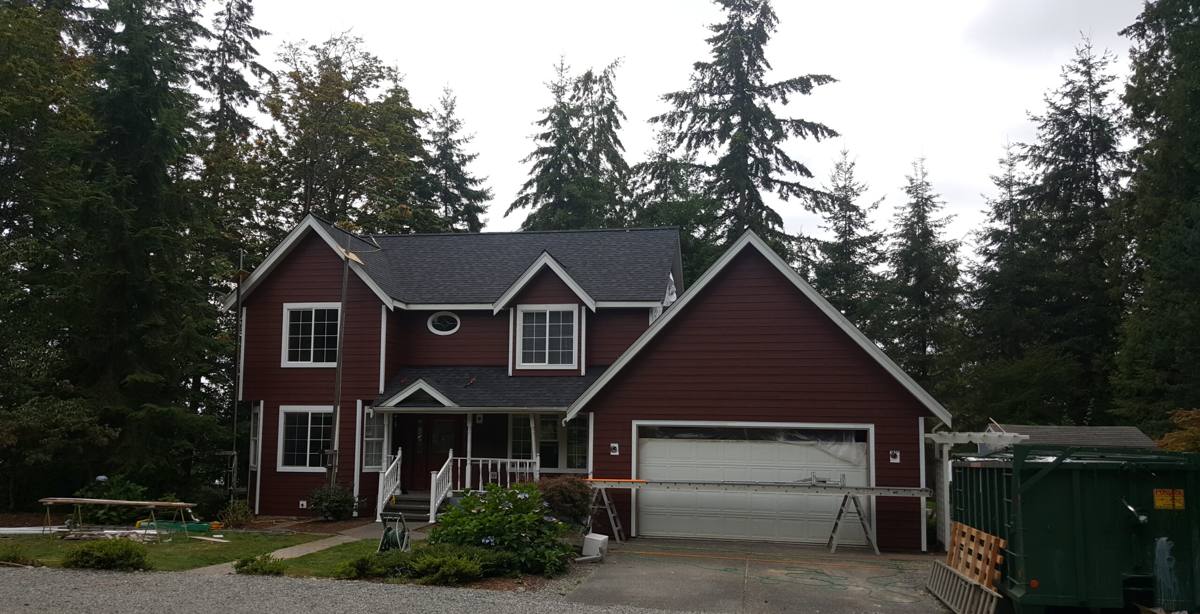
What Island Living Does to Siding Over Time
Salt Air and Corrosion
Airborne salt doesn't just affect metal fasteners and hardware — it accelerates the breakdown of paint films, promotes mildew growth, and works its way into seams and end joints where lesser materials swell or delaminate. A material that isn't engineered for a marine-adjacent environment will show it first around joints, corners, and anywhere fasteners penetrate the surface.
Wind-Driven Rain
Being surrounded by open water means wind off the Gulf and Tampa Bay reaches these homes with little to break it up. Wind-driven rain doesn't fall straight down — it gets pushed sideways and upward under laps, around window trim, and into any gap in the water-resistive barrier. Siding that isn't installed with correct lap coverage, flashing, and fastening tends to let moisture in long before it looks damaged from the street.
Year-Round UV Exposure
Florida sun is intense on any home, but a waterfront lot with less shade cover and reflected light off the water adds to the UV load a south- or west-facing wall takes on. Factory-cured finishes hold color far longer under this kind of exposure than field-applied paint, which chalks and fades noticeably faster.
Humidity and Moisture Cycling
Homes near water deal with near-constant humidity, which means siding is rarely fully dry. Materials that absorb moisture and then dry out repeatedly go through expansion and contraction cycles that stress paint bonds, fastener holes, and joints — a slow process, but a steady one.
Signs an Island Estates Home Needs Siding Replacement, Not Just Repair
- Soft or spongy spots when you press on the siding, especially near the bottom courses or around window and door trim
- Persistent peeling or bubbling paint that comes back within a year or two of repainting
- Visible gaps opening up at butt joints, corners, or where siding meets trim
- Musty odors or discoloration on interior walls that share an exterior wall
- Warping, buckling, or a "wavy" look across a wall plane
- Siding that was never rated for coastal wind exposure to begin with
- Repeated localized patch repairs that keep reappearing in the same spots
Any one of these on its own might be a repair. Several together, especially on a wall facing the water or prevailing wind, usually means the underlying material and water management system have been compromised for a while — and a full replacement is the more honest recommendation.
What a Correct Siding Replacement Actually Involves
Replacing siding on a coastal or waterfront home isn't just removing old panels and nailing up new ones. The work that happens underneath the visible surface determines whether the new siding lasts 30 years or fails again in five.
Full Tear-Off and Substrate Inspection
We remove the existing siding down to the sheathing so it can actually be inspected — not just the parts visible from the ground. Water damage often hides behind siding that looks fine from the outside. Any rotted or compromised sheathing gets replaced before anything new goes up; siding installed over damaged substrate fails no matter how good the material is.
Water-Resistive Barrier and Flashing
A correctly installed weather barrier, with properly lapped and sealed seams, is what actually keeps wind-driven rain out of the wall assembly. Flashing around every window, door, and penetration has to be installed in the right sequence — over the barrier in some spots, under it in others — so water is directed out and down, never trapped.
Fastening to Manufacturer and Local Wind-Load Spec
James Hardie panels and planks have specific fastener types, spacing, and embedment requirements, and those requirements get more conservative in high-wind coastal zones. Pinellas County's wind-load requirements exist because of exactly the kind of exposure island homes see. Correct fastening isn't optional — it's the difference between siding that stays put in a tropical storm and siding that doesn't.
Proper Clearances and Joint Treatment
Siding needs to be held off the roofline, deck surfaces, and grade by the manufacturer's specified clearance, and end joints need to be treated and shimmed correctly so they don't wick moisture. These are small details that are easy to skip and are exactly what separates a durable installation from one that looks fine on day one.
Our Process for an Island Estates Project
- On-site walkthrough of the home's exposure — which walls take the most wind, sun, and salt spray, and what that means for the job
- Inspection of current siding and, where accessible, the sheathing and trim behind it
- Written estimate covering full tear-off, sheathing repair allowance, water-resistive barrier, flashing, James Hardie material and ColorPlus finish selection, and installation to manufacturer spec
- Permitting handled before work begins — required for full siding replacement in Clearwater and Pinellas County
- Tear-off, substrate repair, barrier and flashing installation, then Hardie installation with correct fastening and clearances
- Final walkthrough with the homeowner and cleanup of the site, including magnetic sweep for stray fasteners around driveways and dock areas
Why We Only Install James Hardie on These Homes
We stopped installing vinyl, engineered wood products like LP SmartSide, and other fiber cement brands years ago, and homes in exposed, salt-air locations like Island Estates are a big part of why. Fiber cement as a category resists the things that break down other materials fastest here: it doesn't feed mold or rot the way wood-based products can if moisture gets behind them, and it's dimensionally stable in a way vinyl isn't, so it doesn't warp or buckle when a wall goes through repeated heat and humidity cycles.
Within fiber cement, we specifically use James Hardie because of two things other brands don't consistently match: the HZ5 climate-engineered formulation built for high-humidity, high-moisture-exposure regions like ours, and the ColorPlus factory-applied finish, which is baked on under controlled conditions rather than painted on-site. That finish holds color and resists fading under sustained UV exposure far better than field-applied paint, and it comes with a dedicated finish warranty separate from the product warranty. For a home facing open water and direct sun most of the day, that combination matters more than it does on a shaded inland lot.
We're not saying every other product is unusable everywhere — we're saying that for the conditions this island puts on a home, we've made Hardie our standard and we stand behind that decision with every install.
How Siding Materials Actually Compare in This Environment
| Material | Salt Air / Coastal Wind | Moisture Behavior | Maintenance | Typical Lifespan Here |
|---|---|---|---|---|
| Vinyl siding | Can warp or crack in sustained high wind and heat | Doesn't rot, but seams and J-channels trap moisture behind panels | Low, but fading and brittleness increase over time | Often replaced sooner in high-UV, high-wind coastal spots |
| Engineered wood (LP-style) | Sensitive to sustained moisture exposure at seams and edges | Wood-based core can swell or deteriorate if water intrusion occurs | Moderate; edge sealing and paint upkeep matter | Variable; heavily dependent on installation and moisture control |
| Cedar / primed wood | Attractive but demands ongoing upkeep in salt air | Prone to moisture absorption, checking, and rot without diligent maintenance | High — regular refinishing needed | Shorter without consistent, costly upkeep |
| James Hardie fiber cement | Non-combustible, dimensionally stable, engineered climate lines for humid regions | Doesn't rot or support mold growth in the material itself | Low — factory ColorPlus finish resists fading and chalking | Long service life when installed to spec, backed by manufacturer warranty |
Why Local Experience on This Island Matters
Island Estates isn't a typical inland Clearwater street. Homes here often sit close to canals or open water, lots can be tight with limited staging space, and many properties have docks, seawalls, or landscaping that a crew needs to work around and protect during tear-off and material staging. A contractor who hasn't worked this specific kind of waterfront setting can underestimate site logistics, debris containment near the water, and the wind-load detailing that Pinellas County code expects this close to open exposure.
A crew that already understands the island's layout, permitting expectations, and the way wind and salt exposure varies wall-by-wall on a waterfront lot moves faster, protects the property better, and gets the water management details right the first time — which matters more here than almost anywhere else in the county.
What to Ask Any Contractor Before You Hire Them
- Are you licensed and insured to do siding work in Pinellas County, and can you provide proof?
- Will you pull the required permit, or is that left to me?
- What's your plan for protecting the seawall, dock, and landscaping during tear-off?
- What fastening schedule and clearances will you follow, and are they matched to this home's wind exposure?
- What happens if you find damaged sheathing once the old siding is off?
- What warranty covers the material, the finish, and your own labor?
Caring for Your Siding After Installation
Correctly installed James Hardie siding is low-maintenance, not no-maintenance. A periodic rinse to remove salt residue and airborne debris, prompt attention to any caulking that separates around trim or penetrations, and keeping irrigation from spraying directly on the wall all go a long way toward getting the full service life out of the installation. None of this is heavy upkeep — it's the kind of basic care that any exterior material benefits from, and it's far less demanding than what wood-based sidings require in this climate.
Ready for a Straight Answer on Your Siding?
If your Island Estates home is showing signs of wear, or you just want an honest assessment of what condition your siding is really in, we're glad to take a look. There's no pressure and no obligation — just a straightforward evaluation from a crew that installs one product, does it to spec, and knows what this island's climate demands. Fill out the form below to schedule a free estimate.