 Clearwater Roofing
 Board & Batten Siding for Oldsmar Homes
Board and batten has become one of the most requested exterior looks in the Tampa Bay area, and Oldsmar is no exception. The style — wide vertical panels with narrow battens covering the seams — shows up on farmhouse-style remodels, coastal cottage builds, and modern accent facades throughout the neighborhoods around Tampa Road, Bayview, and the East Lake corridor. It's a clean, architectural look that works whether you're doing a full exterior or dressing up a gable, porch, or garage face as an accent.
What most homeowners don't realize until they start pricing it out is that board and batten is also one of the least forgiving siding styles when it's installed wrong. The vertical panel joints, the batten spacing, and the number of fasteners involved all create more opportunities for water to find a way in than a standard lap siding job. In a climate like ours — hurricane-force wind events, constant UV exposure, wind-driven rain, and salt air pulled in off Tampa Bay and the Gulf — those installation details aren't cosmetic. They're the difference between siding that lasts decades and siding that's rotting or delaminating behind the battens in five years.
We install board and batten exclusively in James Hardie fiber cement, and we work Oldsmar regularly as part of our Clearwater and Pinellas County service area. This page covers what a correct board and batten installation actually involves here, and why the details matter more in this climate than almost anywhere else in the country.
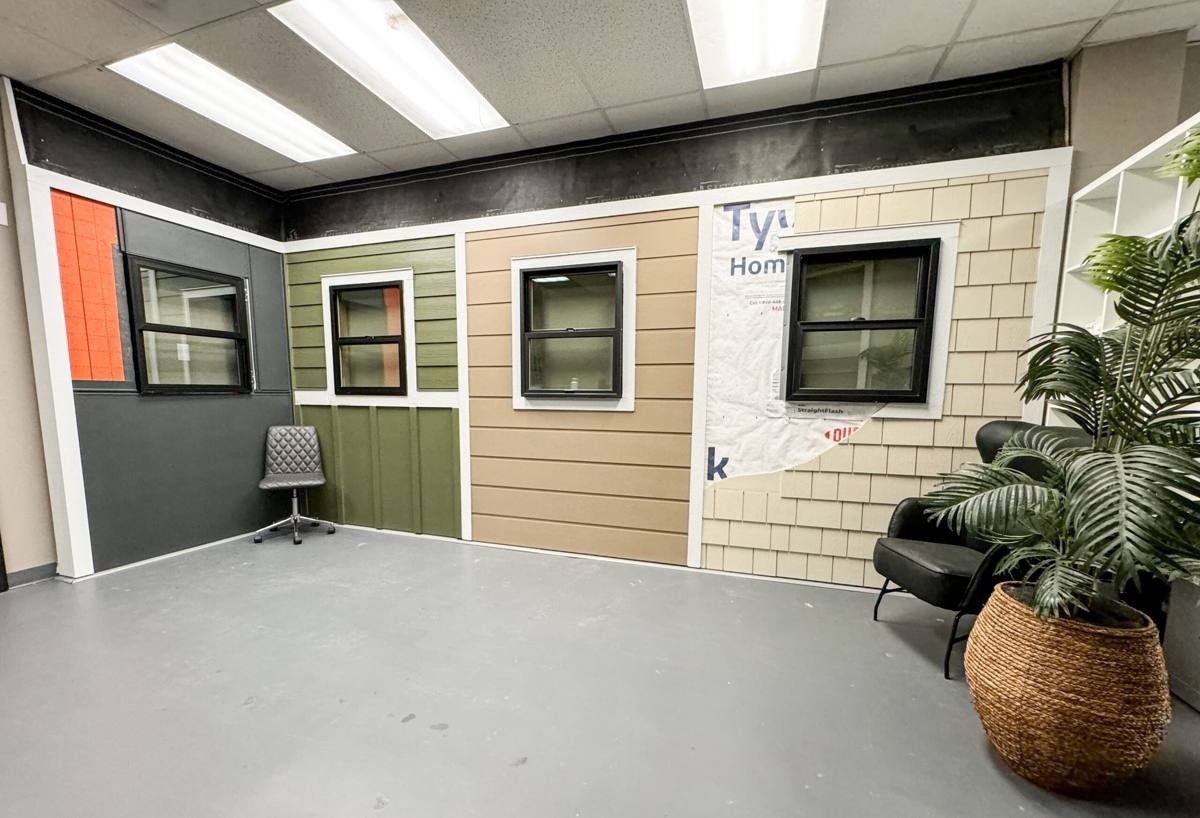
Why Oldsmar's Climate Is Hard on Vertical Siding
Oldsmar sits close enough to Tampa Bay that homes get a steady dose of salt-laden air, and it's fully exposed to the same wind and storm patterns that hit the rest of Pinellas County. A few specific stressors matter for board and batten in particular:
- Wind-driven rain: Vertical siding runs water down the face of the wall fast, and during a wind-driven storm that water doesn't fall straight — it's pushed sideways into every seam, batten edge, and penetration point.
- UV exposure: Florida gets more direct sun hours per year than most of the country. Paint film breaks down faster here, and any material with a resin-based coating (rather than a factory-baked finish) will chalk, fade, or crack sooner.
- Hurricane-force wind loads: Board and batten has more individual fastening points than lap siding. Every batten strip and panel edge needs to be fastened to manufacturer spec, or it becomes a lever point for wind to grab during a tropical storm or hurricane.
- Salt air corrosion: Fasteners, flashing, and trim all take more of a beating near the bay. Non-corrosive fastener selection isn't optional here — it's what keeps the wall system intact ten years out.
- Humidity and moisture cycling: Pinellas County's humidity means any siding material that absorbs moisture is going to swell, and any coating that isn't sealed on all six sides is going to let that moisture in eventually.
None of this means board and batten is a bad choice for Oldsmar. It means the material and the installation both have to be matched to the climate, not just picked for the look.
Why We Only Install James Hardie for This Style
Board and batten can be built out of several materials — vinyl, engineered wood, and fiber cement all offer a "board and batten" product line. We install James Hardie exclusively, and for this specific style the reasoning is even more direct than usual.
Vertical siding styles put more seams and more fastener penetrations into a wall than horizontal lap siding does. Every one of those seams is a potential water entry point, and every one of those fasteners needs to hold through decades of wind load. Fiber cement gives us a rigid, dimensionally stable board that doesn't expand and contract with humidity the way wood-based products do, and doesn't soften or sag in direct sun the way vinyl can — vinyl board and batten in particular tends to show waviness on a sun-exposed wall over time, since the panels aren't rigid enough to stay perfectly flat under heat.
James Hardie's ColorPlus finish is baked on at the factory and warranted against fading and cracking, which matters enormously for a vertical application — batten shadow lines make any unevenness in color or sheen far more visible than they'd be on flat lap siding. And Hardie's HZ5 product line is engineered specifically for high-humidity, storm-prone climates like ours, which is exactly the profile Oldsmar sits in.
What Correct Board & Batten Installation Involves
A board and batten system is a stack of parts working together, not just panels nailed to the wall. On every job we do, that includes:
- A proper weather-resistive barrier behind the panels, installed and lapped to shed water downward at every seam
- Correct panel gapping per Hardie's installation instructions, so the boards have room to move without buckling
- Battens fastened through the panel into the framing or furring at the specified spacing — not just cosmetically placed over the seam
- Flashing at every horizontal transition: window heads, doors, roof lines, and the base of the wall where it meets grade or a lower roof
- Corrosion-resistant fasteners rated for coastal exposure, driven to the correct depth so they seal without crushing the board
- Proper clearance at the bottom of the wall so board and batten doesn't sit in standing water or trap moisture against the foundation
Skip any one of these and the siding might still look right on installation day. The problems show up two, five, or ten years later — usually as staining, soft spots at the base of boards, or battens that have pulled loose in a wind event.
Board & Batten vs. Other Hardie Siding Styles
Homeowners in Oldsmar often ask how board and batten compares to Hardie's other profiles before committing to it. Here's an honest breakdown:
| Style | Best For | Installation Complexity | Maintenance |
|---|---|---|---|
| Board & Batten | Farmhouse, coastal, modern accent looks; gables and porch faces | Higher — more seams and fasteners per square foot | Low, if installed correctly |
| HardiePlank Lap | Traditional and most home styles; full-house siding | Standard — fewer vertical seams | Low |
| HardiePanel Vertical | Modern builds, large flat sections | Moderate — similar to board and batten without battens | Low |
| Shingle/Shake Profile | Accent gables, coastal cottage detailing | Higher — more individual pieces | Low |
Board and batten is a great fit for a lot of Oldsmar homes, especially as a full-house treatment on newer construction or as an accent on gables and entry features on a remodel. It's just worth going in knowing it demands more precision at install than a standard lap job.
Full Replacement vs. Accent Application
Not every board and batten project in Oldsmar is a full re-side. We see three common scopes:
Full Exterior
The whole home gets board and batten, typically on new construction, a gut renovation, or a full siding replacement where the homeowner wants the farmhouse or modern coastal look throughout.
Accent Application
Board and batten on a gable end, dormer, or porch feature while the rest of the home keeps lap siding or another material. This is common on remodels where the goal is architectural interest without a full re-side budget. The transition detail between the two siding types has to be flashed correctly — this is one of the more common places we find problems on homes where a different style was mixed in later without proper flashing.
Garage and Outbuilding Faces
A straightforward way to update curb appeal on a budget, often paired with new garage door trim or a color refresh on the rest of the house.
Our Process for Oldsmar Jobs
- On-site assessment: We look at the existing wall condition, any water damage on the current siding, window and door flashing, and the framing behind it before quoting anything.
- Scope and product selection: Full replacement or accent, panel width, batten spacing, and ColorPlus color selection, matched to the home's style and HOA requirements where applicable.
- Tear-off and prep: Removal of existing siding, inspection and repair of any sheathing or framing issues found underneath, and installation of a proper weather-resistive barrier.
- Installation to manufacturer spec: Panels, battens, flashing, and fasteners installed per James Hardie's published instructions for our wind zone and exposure category.
- Final inspection and cleanup: Walkthrough of the finished work, caulking and trim details checked, site cleaned up.
Questions Worth Asking Before You Hire Anyone
- Do you install board and batten to James Hardie's published fastening and flashing specs, or a shortcut method?
- What fastener type and spacing will you use, given the coastal exposure here?
- How do you flash the base of the wall and any horizontal transitions?
- Are you a James Hardie Preferred Contractor, and can you speak to their warranty requirements?
- Have you worked in Oldsmar or the surrounding Pinellas County area before?
Why Local Experience Matters for This Style
Board and batten is installed differently in a dry inland climate than it is a few miles from Tampa Bay. Wind zone requirements, flashing details at grade, and fastener selection all shift based on local exposure conditions — a crew that mostly works inland or out of state may not default to the coastal-grade details Oldsmar actually needs. Working this area regularly means we already know the wind exposure categories, the moisture patterns specific to homes near the bay, and the kind of storm loading Pinellas County code inspectors are looking for on a siding job. That local knowledge shows up in the details — fastener choice, flashing laps, batten spacing — long before it ever shows up as a problem on your wall.
Get a Local Estimate
If you're considering board and batten for a home in Oldsmar — whether it's a full exterior, an accent feature, or a repair on existing siding that wasn't installed to spec — we're happy to come take a look. The estimate is free, there's no pressure, and you'll get a straight answer about what your home actually needs. Use the form below to get started.